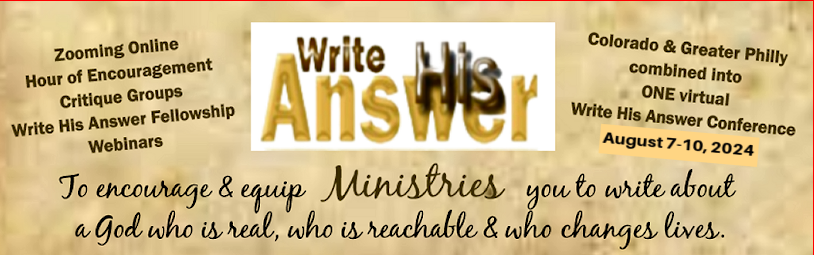
Plan now to attend the Write His Answer Conference. Again this year the Colorado and Greater Philly Christian Writers Conferences will be combined into ONE virtual conference August 7-10, 2024. With over 100 hours of LIVE content that will be available through the end of the year, this is an incredible learning and networking opportunity. Registration opens June 1.
You’ll find the conference info on the Colorado website – https://colorado.writehisanswer.com.
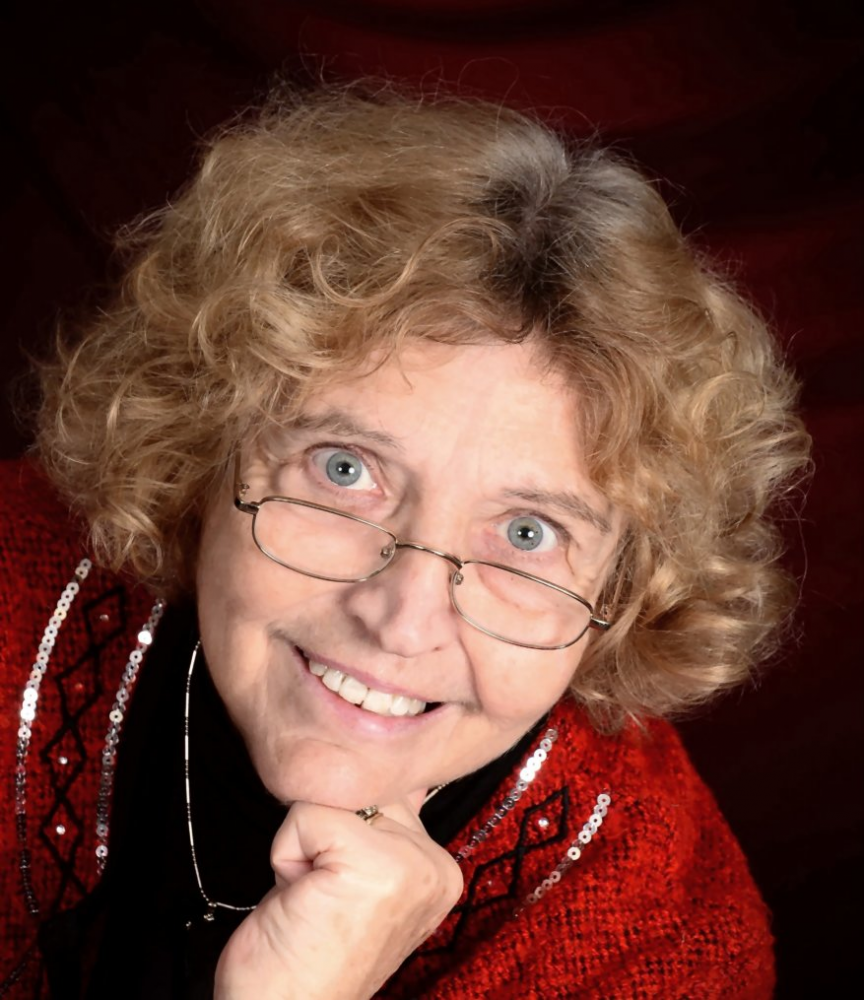
My name is Marlene Bagnull and Write His Answer Ministries is all about encouraging and equipping you to write about a God who is real, who is reachable, and who changes lives!
♦ Have you ever been ready to give up?
♦ Have you tried everything you know but feel like you’re banging your head against a brick wall?
♦ What do you do when the accuser tells you that your best isn’t good enough – that it never has been and never will be?
Perhaps it’s a manuscript you’ve been working on for years. You’ve rewritten it not just once or twice but many times. Still you’ve been unsuccessful in finding an agent or publisher. It makes no sense because you know it’s something God has called you to write. You’ve studied the craft. You’ve gone to critique groups and conferences trying to find that missing something. And now . . . now you’re not sure you can keep on keeping on.
That was my experience with my first book that some of you know was rejected by 42 publishers over a six-year period. If I had given up (and believe me, there were many times I wanted to), it and the seven books that followed would never have been published. I would not have founded the Greater Philly Christian Writers Conference in 1983 or said yes in 1997 to directing the Colorado Christian Writers Conference. Both conferences are still encouraging and equipping Christians to “write about a God who is real, who is reachable, and who changes lives.” Because of the pandemic we went virtual in 2021. In 2024 we are again combining the two conferences into one virtual conference August 7-10. Registration will open June 1. For info click here.
Now is the time to believe
you can make a difference!
 "Fix your eyes on Jesus" and rededicate yourself and your writing to Him.
Father, I ask You to use each one of us in Ephesians 3:20 ways. Help us to believe, really believe, that You can use us to make a difference. Most of all help us to draw increasingly close to You so that the words we write and the lives we live will point others to Your Son who came and is coming again. In His name, Amen

Registration opens June 1
Join us weekly on Zoom
for our Monday evening
Write His Answer Fellowship
and our monthly
Hour of Encouragement.
Be sure to join our mailing list
to receive the needed links
and other info to help
grow your writing ministry.
Click here!
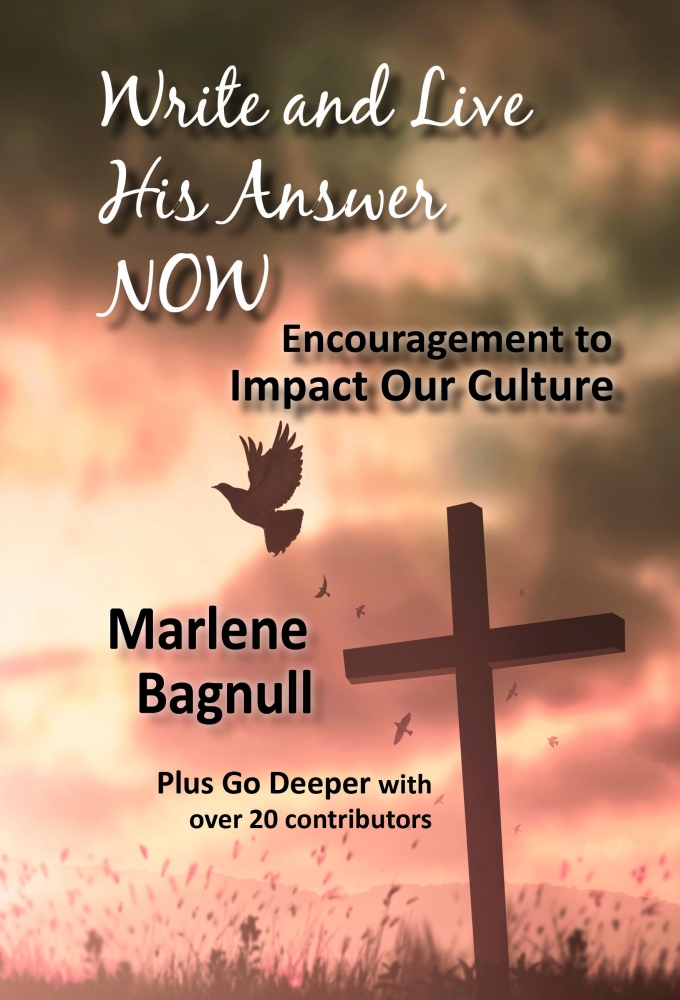
Coming soon!
Visit my blog at
www.writehisanswer.blog
Retail $20.99
Special – $10.95
Includes links to 4 audio workshops
Click here for info & to purchase!
In print over 30 years!
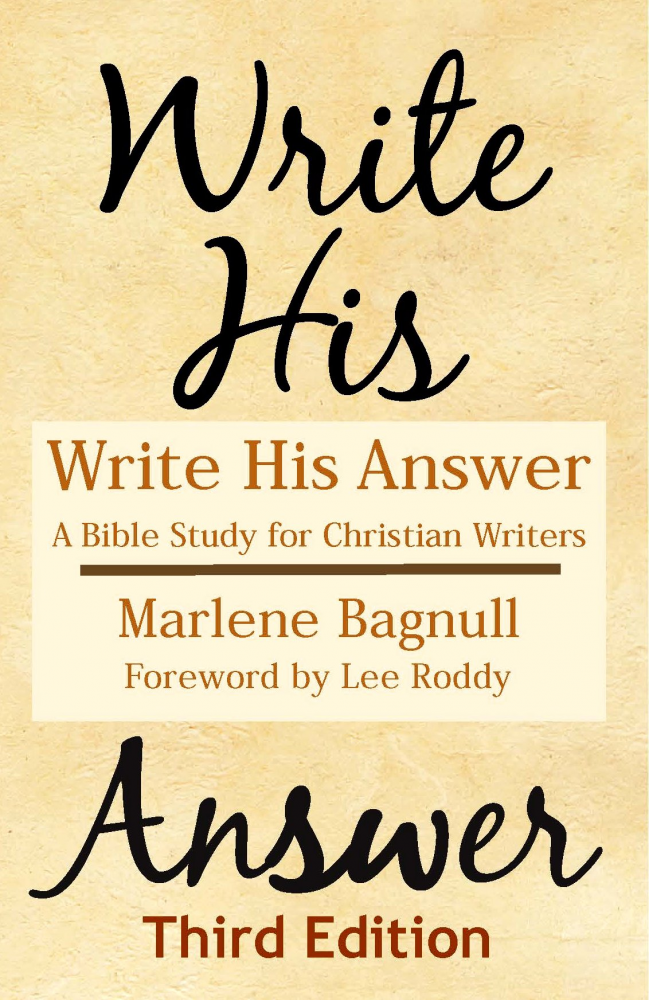
Retail $13.99
Only $10 through
Write His Answer Bookstore
Click here for info & to purchase!
Now Is the Time
Now is the time
to say yes to God's call,
the time to seek Him
and His will,
the time to prioritize
what's really important
and put Him first.
Now is the time
to discern what slows us down
and trips us up,
to confess our sins
to Him and each other
and cast aside our doubts.
Now is the time
to fix our eyes on Jesus
and to run with perseverance
the race set before us
to proclaim the Good News
to the lost – now
while there is still time.